













The interpretation of man’s essential nature as referenced in this exhortation in Ephesians 4:22-24 is pivotal to one’s view of sanctification. And this doctrine is essential to the biblical counseling model employed to guide a defeated Christian to victorious life in Christ.
“22 that you put off, concerning your former conduct, the old man which grows corrupt according to the deceitful lusts, 23 and be renewed in the spirit of your mind, 24 and that you put on the new man which was created according to God, in true righteousness and holiness.” Ephesians 4:22-24, NKJV.
The meaning of “the old man”
A key issue to be clarified here is the meaning of “old man” in this context and how it contrasts with the “new man.”
As we check the Greek lexicon we see the basic definitions used in Ephesians 4:22. Old: “palaios” is an adjective meaning “old, ancient; no longer new” (Thayer). Vines Expository Dictionary states: “‘Old’ …of what belongs to the past, e.g., the believer’s former self before his conversion, his ‘old man.'” “Man” is “anthropos” which occurs over 500 times. It means “a human being, whether male or female.” It has more precise uses also: “to distinguish man from beings of a different order; with reference to two fold nature of man, body and soul [material / immaterial]; with reference to the two fold nature of man, the corrupt [fleshly] and the truly Christian man [Spirit-filled], [which is] conformed to the nature of God (Thayer; bracketed words added).
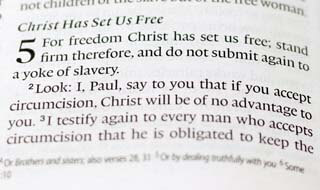
To be precise, the “old man” is the unregenerate human spirit, i.e., who a person was in Adam as identified by his previous spiritual condition (death and depravity). This is an essential concept in order to differentiate the “old man” (which in the believer was crucified with Christ and is out of the picture) and the flesh (which is an ongoing nemesis – Gal. 5:16,17; Rom. 7:17).
Parallel passages
Romans 6:6: “knowing this, that our old man was crucified with [Him], that the body of sin might be done away with, that we should no longer be slaves of sin.”
Colossians 3:9: “Do not lie to one another, since you have put off the old man with his deeds”
Notice that the other two texts view the old man as having been crucified and already “put off” (past tense). Since the New Testament pattern is to present doctrine and then apply it to practical issues of life, the doctrinal underpinnings of Ephesians 4:22 need to be clear. In Ephesians chs 1-3 believers have been (past tense) saved, regenerated, and sealed by the Holy Spirit; they were raised with Christ and are seated with Him in the heavenlies! (Eph. 1:13; 2:1-10).
The figurative use of “the old man”
So if the old man is no longer the identity of the child of God, why does this text in Ephesians seem to view the old man as still present in the believer? It sounds like the old man has not actually been”put off” or “crucified” yet; rather, the believer should do this. Yet, Ephesians 4:22 states “That you put off concerning your former conduct, the old man which grows corrupt (Greek: present passive participle) according to the deceitful lusts.”
A watershed issue in interpreting this verse (and its implications for progressive sanctification) is to recognize the figurative use of “old man” in this text. This figurative use, metonymy, uses one word for another that it suggests: i.e., the “old man” for the behavior of the “old man.” Consider other examples of the use of metonymy.
- Romans 13:14a counsels, “But put on the Lord Jesus Christ…” Ontologically, Christ is in the believer (Col. 1:27) and in heaven. However this figurative expression refers to the believer putting on Christ’s virtues. And note how second half of the verse is similar to admonition of putting off the behavior of the old man: “…and make no provision for the flesh, to fulfill its lusts” (Rom. 13:14b).
- Another example of metonymy is the use of the term “the cross,” not as the literal wood structure (that has disappeared), but what Christ accomplished on the cross. “But God forbid that I should boast except in the cross of our Lord Jesus Christ” (Gal. 6:14; cf. Col. 1:20).
This figurative use of “old man” agrees with other New Testament usage. The Greek “apotithemi” means “to put off or aside or away.” It occurs eight times in the New Testament and refers to putting off clothing. This is the literal use in Acts 7:58: “…and the witnesses laid down [“apotithemi”] their clothes at a young man’s feet, whose name was Saul.” The other seven occurrences of this word refer to putting off wrong behavior using the imagery of putting off old, dirty clothing (Rom. 13:12; Eph. 4:22, 25; Col. 3:8; Heb. 12:1; James 1:21; 1 Pet. 2:1. This is also the way “put off” is used in Ephesians 4:22.
Robertson Word Pictures makes this comment on the Greek grammar of this verse: “That ye put away (apoyesyai). Second aorist middle infinitive of “apotiyhmi” with the metaphor of putting off clothing or habits as “apoyesye” in Col. 3:8 (which see) with the same addition of “the old man” (ton palaion anyrwpon) as in Col. 3:9.” So, putting off the “old man” in Ephesians 4:22 refers to putting off the behavior and attitudes associated with the “old man” (emphasis added).
Therefore, the term”old man” in Ephesians 4:22 is used in a qualitative sense, rather than technical sense. The qualitative use is brought out by the phrases before and after it. Note the word order in the verse. It does not begin with, “put off the old man,” but “…put off concerning your former conduct the old man which grows corrupt according to the deceitful lusts.” The emphasis is on the wrong behavior to be set aside.
Note that this exhortation to believers is not requiring the removal of the old man literally (since “the old man” has already been crucified and put off at regeneration). This “putting off” happened when the believer was taken out of Adam and put into Christ ( Col. 3:9; Gal. 2:20). Romans 6:6 uses “old man” in this specific, analytical sense also. (This would be expected since Romans 6-8 is a detailed, theological explanation of progressive sanctification.) [1]
The provision of new life is foundational to these exhortations to righteous behavior. Ephesians chs 1-3 believers have been (past tense) saved, regenerated, and sealed by the Holy Spirit; they were raised with Christ and are seated with Him in the heavenlies! (Eph. 1:13; 2:1-10). Notice how Ephesians 4:24 is the positive side of the exhortation: “that you put on the new man which was created (Greek: Aorist Passive Participle) according to God, in true righteousness and holiness. The word “created” (ktizō) is used in Ephesians 2:10: “For we are His workmanship, created in Christ Jesus for good works…”
Common ground
The more common interpretation of this text (that the “old man” refers to a co-equal sinful nature in the regenerate believer’s soul) also concedes a figurative use of “old man” here; those commentators do not teach that the “old nature” can be literally removed from one’s person. (If that could occur, the inward struggle of Galatians 5:17 would disappear.) Ironically, when Romans 6:6 is taught accurately (“knowing this, that our old man was crucified with Him...”) it is wrongly assumed that one is teaching that the tendency to sin is eradicated.
Therefore, there is agreement that the admonition of Ephesians 4:22 refers to putting off the old, sinful behavior patterns. In reference to the verse we are examining, Presbyterian commentator, Albert Barnes stated,
“The meaning here is, With respect to your former conduct or habits of life, lay aside all that pertained to a corrupt and fallen nature. You are not to lay everything aside that formerly pertained to you. Your dress, and manners, and modes of speech and intercourse, might have been in many respects correct. But everything that proceeded from sin; every habit, and custom, and mode of speech and of conduct that, was the result of depravity, is to be laid aside. The peculiar characteristics of an unconverted man you are to put off, and are to assume those which are the proper fruits of a renewed heart.”
Another clarification
Then, what is the cause of the Christian’s inner tendency toward sin? It is not the “old man,” but is the flesh which could be considered the residue of the old man (the independent, unbelieving patterns in the mind, will, and emotions). This is what is referred to in Ephesians 4:22 that which “grows corrupt according to the deceitful lusts.” [2]
The flesh is still vulnerable to the Sin principle (Rom 7:18, 20; Gal 5:17). Paul distinguishes the flesh from his essential nature [new spirit/new man]. “If, then, I do what I [new spirit] will not to do, I agree with the law that it is good. But now, it is no longer I [new spirit] who do it, but sin that dwells in me. For I know that in me (that is, in my flesh) nothing good dwells; for to will is present with me, but how to perform what is good I do not find [when trying to live independently and legalistically]. For the good that I [new spirit] will to do, I do not do; but the evil I [new spirit] will not to do, that I practice [when trying to live independently and legalistically]. Now if I do what I [new spirit] will not to do, it is no longer I [new spirit] who do it, but sin that dwells in me” (Rom. 7:16-20, NKJV, bracketed words added).
Conclusion
Since the old man ‘s spiritual orientation resides in “the flesh,” the apostle used “the old man” in a figurative sense— to “put off” the behavior associated with one’s former identity in Adam. Ephesians 4:24 contrasts the new quality of life to be “put on.” Just as the new lifestyle is possible and obligatory because of the new essential nature of the redeemed person’s spirit (“the new man”), the old, corrupt lifestyle is possible to “put off” because the old condition of the unregenerate spirit (“the old man”) has been crucified and replaced (Gal 2:20; Rom 6:6; 2 Cor 5:17).
In other words, the believer can’t lay aside who he was spiritually in Adam (the old man) because that already happened! Rather, he should lay aside the residue of that position which is—more accurately—the works of the flesh.[1]
Figurative literary usage can be employed while maintaining a precise doctrinal understanding. Therefore Paul uses “old man” literally in Romans 6:6 and Colossians 3:9 but figuratively in Ephesians 4:22.
3rd edition, 2022 Original title: The Use of ‘Old Man’ in Ephesians 4:22
Copyright 2006 by John Woodward. Permission is granted to reprint for non-commercial use.
[1] Martin Lloyd-Jones and John Murray have clarified that “old man” is not still in the believer. For further study, see appendix B of David Needham’s Birthright which goes into a detailed study on the terms “old man” and “flesh,” showing them not being synonymous. It is online at https://gracenotebook.com/the-relationship-between-the-terms-old-man-and-flesh/.
Further discussion of the terms “old nature” and “new nature” see Does the Believer Have Two Natures?
[2] A reason that Ephesians 4:22 has been misinterpreted is the popularity of dichotomy, i.e., that man is body and soul only; the belief that the human “spirit” only a synonym of “soul” and is not distinct from it. But if man is only body and soul, this logically requires two equal “natures” at war in the regenerated believer. However, if man is body, soul, and spirit (trichotomy) it would clarify that the human spirit is the seat of his essential nature (1 Thess. 5:23,24; Heb. 4:12; 2 Cor. 5:17; Rom. 8:16). The born again believer’s spirit is the locus of regeneration, the crucifixion of the old man, the creation of the new man, the reception of the divine nature. The spirit is the constitutional part of man that changes identification from Adam to Christ at conversion (1 Cor. 15:22; Rom. 5:14-21). This is where the believer’s new heart is expressed—a heart in which is written God’s holy law (Jer. 31:33).
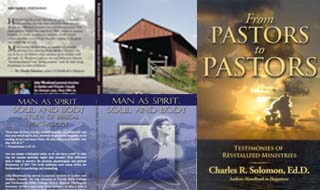
For a more detailed treatment of Trichotomy, see Man as Spirit, Soul, and Body: A Study of Biblical Psychology at https://gracenotebook.com/books-in-print/.
Copyright © 2006, revised 2026 by John B. Woodward. Permission is given to reprint this article if credit is given to the author and GraceNotenbook.com. Biblical quotations are from The Holy Bible, New King James Version (copyright © by Thomas Nelson).